Things to Do in Port-au-Prince
Charcoal smoke, oil-drum angels, and rum that tastes like survival
Top Things to Do in Port-au-Prince
Find activities and tours you'll actually want to do. Book through our partners -- no booking fees.

Plan Your Trip
Essential guides for timing and budgeting
Climate Guide
Best times to visit based on weather and events
View guide →Day Trips
The best excursions and nearby destinations worth the journey
Explore day trips →Where to Stay
Best neighbourhoods, hotel picks, and booking tips
Find hotels →Travel Insurance
What's required, what coverage matters, and how to get a quote
Read guide →What to Pack
Climate-specific gear, essentials, and what to leave at home
See packing list →When Should You Visit Port-au-Prince?
Tap a month for weather, crowds, and highlights
View full year-round climate guide →Explore Port-au-Prince
Boutilliers
City
Cathédrale Notre Dame de Port Au Prince
City
Centre D'Art
City
Champ de Mars
City
Cité Soleil
City
Fort National
City
Furcy
City
Kenscoff
City
Marché de Fer
City
Musée D'Art Haïtien
City
Musée du Panthéon National Haïtien
City
Palais National
City
Pétion Ville
City
Place D'Armes
City
Your Guide to Port-au-Prince
About Port-au-Prince
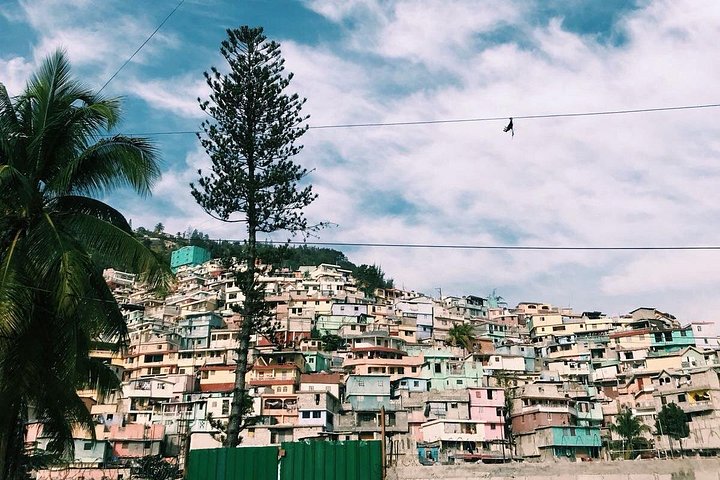
Port-au-Prince shouts before it shows. Croix-des-Bouquets metalworkers hammer oil drums into saints, mermaids, veve spirits bound for Miami and Paris galleries. The clanging carries blocks. Down in the lower city, charcoal smoke curls from griot carts, pork crackling in rendered fat while pikliz waits in repurposed jars.
The city refuses to package itself. Mid-morning heat on Champ de Mars slows thought. Traffic on Route de Delmas rewards patience, punishes schedules. Petition-Ville feels like another nation. A breeze reaches the hills. Franco-Creole restaurants line Rue Lamarre, galleries holding a UNESCO-recognized art tradition. Honesty matters.
Security challenges in the lower city are real, documented, not to be dismissed. Some neighborhoods close after dark. Infrastructure follows its own rules. Tap-taps still thread the streets, hand-painted trucks carrying biblical scenes and Creole proverbs. Iron Market's century-old Eiffel-era ironwork shelters vendors selling Barbancourt rum and sequined Vodou flags.
Port-au-Prince has survived earthquakes, coups, international indifference. It needs no pity. Come prepared. Come open-eyed. Earn its respect.
Travel Tips
Transportation: Tap-taps rule Port-au-Prince transit. Hand-painted trucks and converted minibuses follow fixed routes for pocket change. They are crowded, unair-conditioned, and during peak gridlock on Route de Delmas, slower than walking. Still, this is how the city moves. After dark or outside Petition-Ville, hire a driver through your hotel. Do not flag one on the street. Motos, motorcycle taxis weaving through traffic, trade speed for safety. Airport pickup is critical. Arrange it in advance through your accommodation. Toussaint Louverture International's arrival scene rewards preparation, not improvisation. Driving yourself is inadvisable even by Caribbean standards.
Money: Haiti runs a dual-currency system that trips up every newcomer. Haitian gourde is official. US dollars circulate freely in Petition-Ville hotels and restaurants. The trap is the phantom Haitian dollar, an informal unit worth five gourdes. Vendors and drivers still quote prices in it. Twenty dollars might mean one hundred gourdes, not twenty US dollars. Clarify every single time. ATMs exist but are unreliable outside Petition-Ville. Power outages knock them offline without warning. Carry cash in mixed small bills. Distribute it across pockets, not one visible wallet. Credit cards work at upscale Petition-Ville spots and almost nowhere else.
Cultural Respect: Haitian Creole, not French, drives daily life. A simple bonjou and mesi anpil opens doors that stay closed to French-only speakers. The warmth is real. Vodou is a recognized national religion, not a curiosity. Treating ceremonies or hounforts as entertainment will offend. Ask before photographing anyone, market vendors and artists. Haitians remember outsiders profiting from their images without giving back. Dress modestly at churches and community gatherings. Haitians are direct, hospitable. But that warmth fades fast if you arrive playing savior. Come to learn. Not to rescue.
Food Safety: Griot is Port-au-Prince's signature bite. Fried pork marinated overnight in sour orange juice and Scotch bonnet. The best version comes from a high-turnover street vendor near Petition-Ville's market. It beats most sit-down spots. Eat where locals crowd and the fire still burns. Skip tap water completely. This includes ice at any place that does not filter its own supply. Fritay stands sell accra, malanga fritters with crisp shells and soft sweet centers. Bannann peze, twice-fried plantain pressed flat between fries. Tassot kabrit, dried goat, chewy and salt-sharp. Barbancourt rum is the national spirit. Aged bottles carry a sugarcane funk found nowhere else in the Caribbean.
When to Visit
Port-au-Prince sits in a tropical band that barely acknowledges winter. Daytime temperatures hover between 30 and 34 degrees Celsius (86 to 93 Fahrenheit) from June through September, then ease to 27 to 31 degrees Celsius (81 to 88 Fahrenheit) between December and February. The hills around Petion-Ville cool enough at night to sleep without air conditioning running.
The real calendar here is not four seasons but two: wet and dry. November through March is the dry stretch. Humidity loosens its grip. The Gulf of Gonave turns that pale turquoise that justifies dragging a camera through the heat. This is the window most travelers target. Hotel rates in Petion-Ville climb accordingly. Guesthouse availability tightens noticeably from December onward.
February brings Kanaval, the Haitian Carnival. Rara bands flood the Champ de Mars with brass, drums, whistles, and street-level energy that makes normal movement impossible for three days running. The smell of kleren, raw cane spirit, and frying accra hangs in the air around every intersection. Want the chaos and the sound?
Come for Kanaval. Want to see the city? Avoid it. April and May mark the first rainy season. Afternoon downpours arrive like clockwork, hammer tin roofs for an hour or two, and turn unpaved roads in the lower city into streams. July brings a brief dry window the Haitians call la petite secheresse. This gap is worth targeting if your schedule is flexible.
August through October is hurricane season. Direct hits on Port-au-Prince are statistically less common than on the northern coast. Yet the flooding risk in low-lying neighborhoods is serious and disruptive enough to reshape your plans overnight. Accommodation rates drop significantly during this stretch, reflecting lower demand.
For budget-conscious travelers, the shoulder months of November and late March offer the strongest balance. Dry enough to walk the city comfortably. Cool enough that heat does not dominate every decision. Quiet enough to get a table at Petion-Ville restaurants without advance planning. Families should target December through February for the most predictable weather.
Solo travelers willing to tolerate afternoon rain will find the wet season surprisingly manageable at Petion-Ville's elevation, where the worst flooding rarely reaches. Port-au-Prince rewards those who plan around its rhythms rather than against them.
Frequently Asked Questions
What Are the Best Things to Do in Port-au-prince?
Port-au-Prince rewards culturally curious travellers with an extraordinary density of history and art. The Marché en Fer (Iron Market) is the unmissable starting point, a restored Victorian cast-iron hall packed with Haitian paintings, metal sculpture, and papier-mâché crafts. The Musée du Panthéon National Haïtien (MUPANAH) on Champ de Mars holds the anchor from Columbus's Santa Marían and relics of Toussaint Louverture, while the hillside suburb of Pétionville hosts excellent galleries, excellent restaurants, and a lively weekend craft market. For those willing to engage seriously with one of the Caribbean's most complex and creatively rich cities, the rewards are unlike anything else in the region.
Are There Beaches Near Port-au-prince?
There are no beaches within the city itself. But the Côte des Arcadins, a string of private resort beaches about 50, 60 km north of the city along Route Nationale 1, is the standard escape for Port-au-Prince residents on weekends. Wahoo Bay Beach and Kyona Beach Club are the two most popular options, both offering day passes, sunloungers, and calm Caribbean water. Budget 60, 90 minutes each way depending on traffic, and note that road conditions on RN1 can be rough in sections.
What Is the Iron Market in Port-au-prince?
The Marché en Fer, Iron Market, is a landmark two-nave cast-iron market hall originally built in 1891, famously said to have been destined for Cairo before being redirected to Haiti. Devastated by the 2010 earthquake, it was meticulously reconstructed and reopened in 2011, covering roughly 4,000 square metres in the middle of downtown. Inside, hundreds of vendors sell Haitian paintings, intricately cut metalwork, wood carvings, and everyday goods, making it simultaneously a working neighbourhood market and the city's best single destination for authentic Haitian crafts.
What Are the Best Markets to Visit in Port-au-prince?
The Marché en Fer (Iron Market) is the headline attraction for visitors buying crafts and art. But the large Marché de Croix-des-Bossales in the La Saline district is the city's oldest and largest general market, a raw, sensory immersion into everyday Haitian commerce with produce, livestock, street food, and secondhand goods filling block after block. For a calmer experience, the weekend craft fair on Place Boyer in Pétionville is excellent for Haitian paintings, metalwork, and papier-mâché at negotiable prices, with a more relaxed atmosphere suited to browsing.
Is Port-au-prince Worth Visiting for a Vacation?
Port-au-Prince is a destination for travellers seeking genuine engagement with an extraordinarily complex, culturally rich place, not a resort holiday. Haiti's visual art tradition is internationally acclaimed, its cuisine is one of the Caribbean's most distinctive, and its revolutionary history is profoundly moving. The honest caveat is that security conditions require serious advance planning: most independent visitors base themselves in Pétionville, use vetted local guides and drivers, and check current government travel advisories (US State Department, UK FCDO) before and during their trip. Go in well-prepared, and the experience is unlike anywhere else in the hemisphere.
What Are the Top Things to Do in Pétionville?
Pétionville, the prosperous hillside suburb where most visitors stay, is the cultural and culinary heart of the Port-au-Prince metro area. Galerie Monnin and Galerie d'Art Nader on Route de Delmas are essential stops for serious collectors of Haitian painting, two of the most respected galleries in the Caribbean. The Thursday-to-Saturday craft market on Place Boyer sells paintings, metalwork, and papier-mâché at negotiable prices; afterwards, the restaurants clustered around Place Saint-Pierre serve exceptional griot (crispy fried pork), tasso, and fresh seafood, often with live konpa music on weekends.
What Is the Musée Du Panthéon National Haïtien (mupanah)?
MUPANAH, set underground on the Champ de Mars plaza in downtown Port-au-Prince, is Haiti's most important national museum and one of the most notable small museums in the Americas. Its vaulted galleries hold the anchor and bell from Columbus's Santa María (recovered from the wreck site off Cap-Haïtien), personal artefacts of Toussaint Louverture and Jean-Jacques Dessalines, the pistol with which Emperor Henri Christophe took his own life, and original documents relating to Haiti's 1804 Declaration of Independence. Admission is modest, check locally for current pricing, and guided tours in French and Haitian Creole are available and strongly recommended.
Where Can You Go Hiking Near Port-au-prince?
The mountains directly above the city are more accessible than most visitors expect: Boutilliers Road climbs from Pétionville into cool forested hills, and informal trails branch off toward viewpoints with sweeping panoramas over the bay, a popular early-morning destination for city residents. For more structured hiking, Parc Naturel La Visite in the Massif de la Selle range (about 50 km southeast) offers cloud-forest trails at elevations above 2,000 metres, with endemic pine forest and rare bird species. A reliable 4WD vehicle and a knowledgeable local guide are strongly recommended for La Visite. Solo hiking in unfamiliar terrain outside the city is not advisable.
When Is the Best Time of Year to Visit Port-au-prince?
December through March is the most comfortable window: temperatures sit in the high 20s°C (low-to-mid 80s°F), humidity is lower, and rainfall is at its minimum. Port-au-Prince sits in a geographic rain shadow that makes it drier than much of Haiti. But two rainy seasons, roughly April to June and August to October, bring regular afternoon downpours and occasional street flooding. If your dates are flexible, January and February are the sweet spot: pleasant weather combined with the build-up to Haiti's spectacular pre-Lenten Carnival season.
What Local Food Should I Try in Port-au-prince?
Haitian cuisine is one of the Caribbean's most distinctive, rooted in West African techniques with French undertones and a bold use of epis (a blended seasoning base of garlic, scotch bonnet, herbs, and citrus). The essentials: griot (twice-cooked crispy pork, the unofficial national dish), tasso (marinated fried goat), diri kole ak pwa (red beans and rice cooked in pork fat), and the rich pumpkin soup joumou, eaten nationwide on New Year's Day to commemorate independence and available year-round in good restaurants. Pétionville has excellent sit-down options for all budgets, and street vendors near Marché Salomon serve honest, very inexpensive versions of the same dishes.
What Language Is Spoken in Port-au-prince, and Will French Help Me Get Around?
Haitian Creole (Kreyòl ayisyen) is the universal everyday language; French is a co-official language used in formal, educational, and business contexts. In Pétionville's hotels and restaurants, staff routinely speak French and many speak some English. Outside that bubble, French is useful but Haitian Creole is what locals respond to with the most warmth, a handful of phrases (mèsi for thank you, bonjou for good morning, kijan ou rele? for what is your name?) signals genuine respect and opens doors. English-speaking guides are readily available through reputable tour operators and are well worth hiring for context and logistics.
More Ways to Experience Port-au-Prince
Tours, day trips, and local experiences curated by on-the-ground operators.
Didn't see anything interesting yet?
Browse Viator's full catalog of tours, day trips, food experiences, and private guides in Port-au-Prince.
See All Port-au-Prince Tours on Viator